

Analytics Application
Transforming Complex Serialization Data into Actionable Insights
Project Snapshot
Role: Product Designer
Platforms: Enterprise Web Application
Team: Product • Engineering • Program Management • Technical Communications • Stakeholders
Responsibilities: Requirements Analysis • Persona Development • Workflow Design • UX/UI Design • Prototyping • Usability Testing • Accessibility Design • Stakeholder Collaboration
Focus: Transforming complex serialization and compliance data into clear, actionable experiences that enable pharmaceutical organizations to monitor operations, resolve supply chain issues, and make informed decisions with confidence.
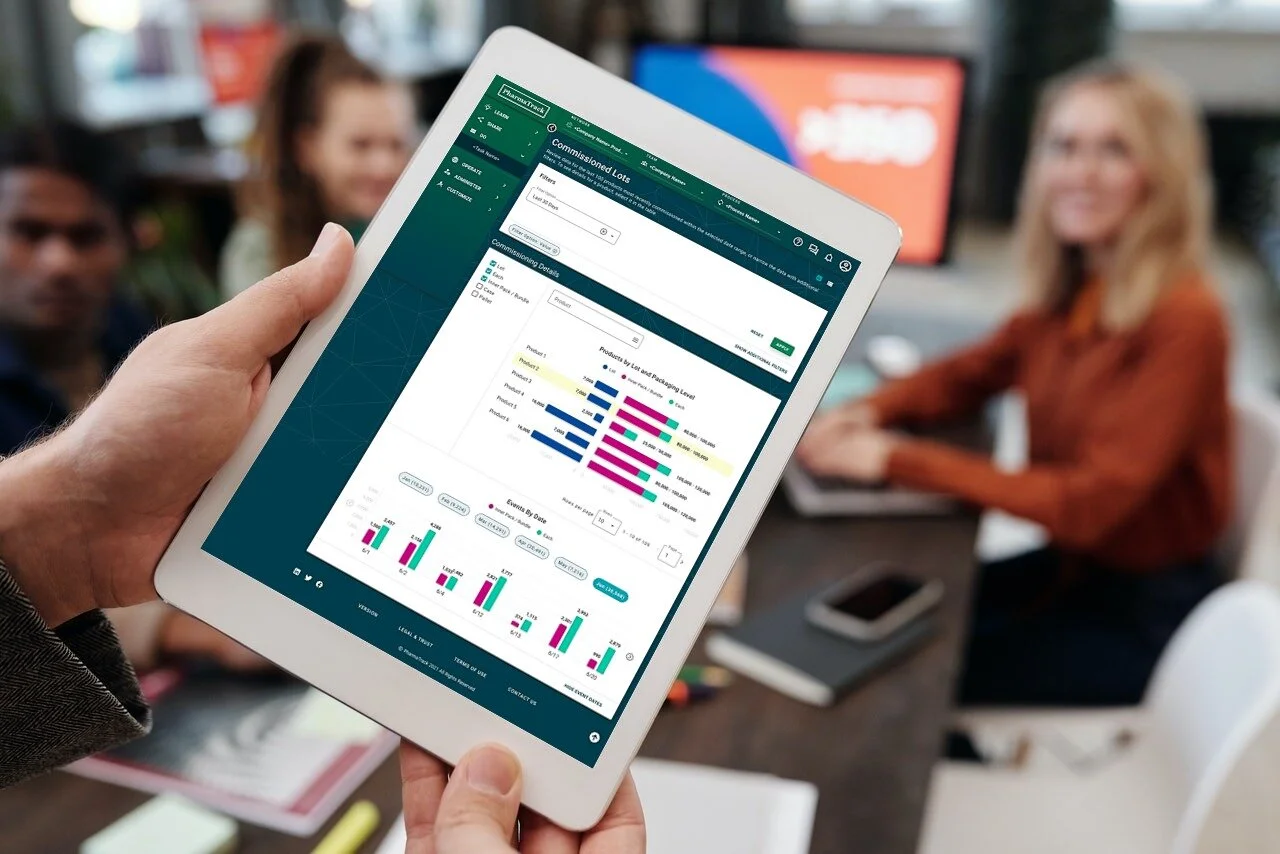
Commissioned Lots dashboard view
Context
This cloud-based analytics platform provides pharmaceutical companies with actionable insights into their serialized drug supply chains. By helping teams proactively monitor operations, resolve compliance issues, and navigate complex global reporting requirements, the platform improves supply chain visibility, reduces disruptions, and supports the reliable delivery of medicines to patients.
My Role
I assumed ownership of the UX/UI design work for several core platform workflows, including auditing, message processing, lot commissioning, serial number reconciliation, and serial number event management.
My contributions included requirements analysis, persona development, workflow design, UI design, prototyping, usability testing, and functional specification updates. Building upon an existing design foundation and design system, I partnered with cross-functional stakeholders to validate solutions, refine designs, and support successful implementation.

Monitor Commissioned Lots Workflow - Review Product and Lot Number Data

Monitor Commissioned Lots Workflow - All Features
UX Challenges & Solutions
Making Complex Serialization Data Easy to Understand
The application needed to present large volumes of serialization data in a clear and actionable way. To reduce cognitive load, I leveraged data visualizations, card-based layouts, and progressive disclosure patterns that allowed users to quickly scan high-level information and drill into details when needed. The interface was built using established Material Design patterns to promote consistency and usability.
Designing for Accessibility
Data-heavy applications can create significant accessibility challenges, particularly around visualizations and information hierarchy. To ensure an inclusive experience, I collaborated with the team to implement accessible color palettes, typography, and visual design patterns aligned with WCAG standards.
Supporting Analysis of Large Data Sets
Users needed efficient ways to navigate and analyze large volumes of operational data. To address this, I designed robust sorting and filtering capabilities, along with visual cues that helped users quickly identify relevant information and uncover insights within complex data tables.
Conducting Remote User Research During COVID-19
The pandemic required all usability testing to be conducted remotely with participants across multiple regions. By facilitating virtual research sessions and presenting findings to stakeholders remotely, I was able to gather valuable user feedback, validate design decisions, and maintain project momentum despite logistical challenges.
User Interface Designs
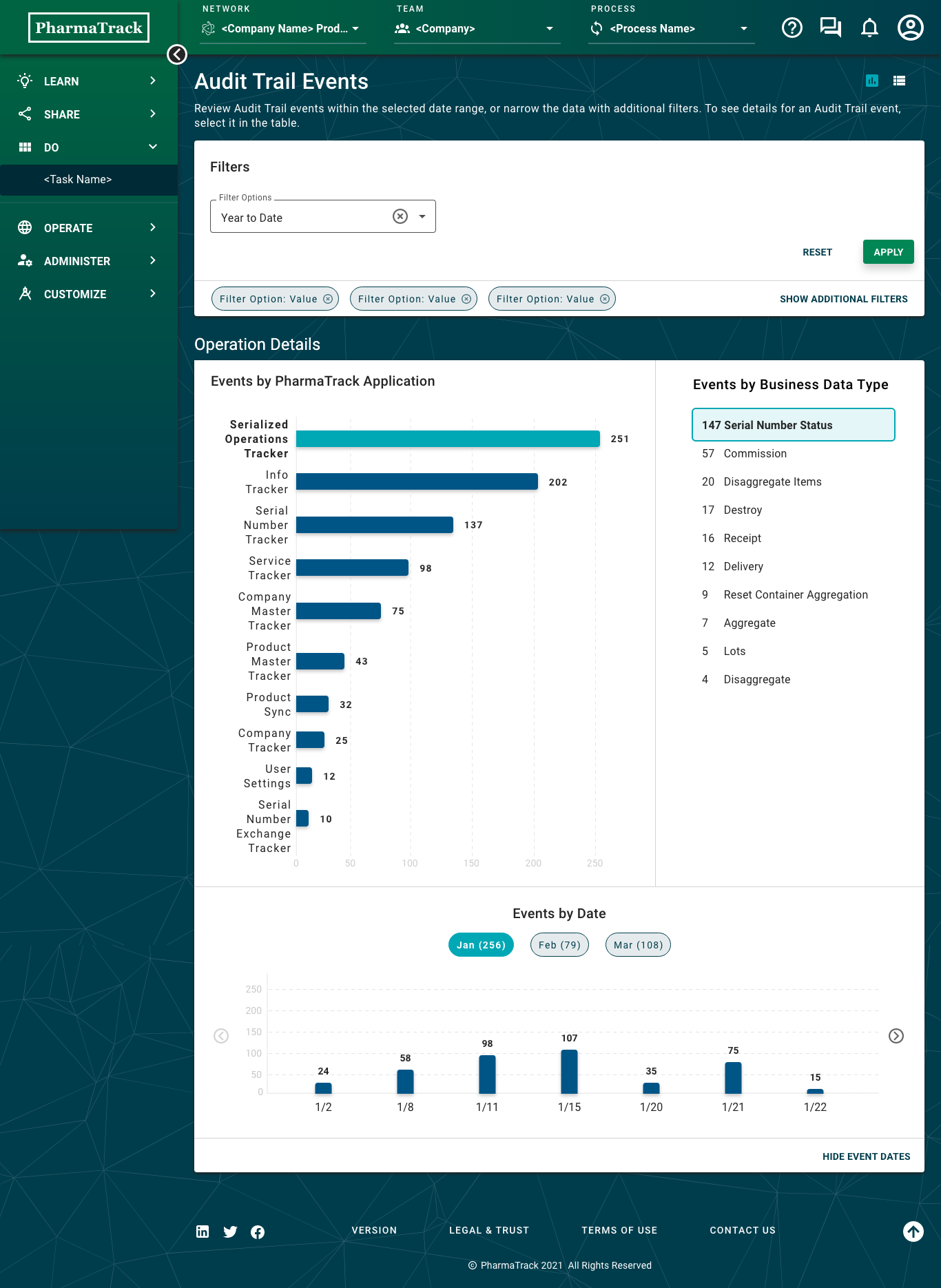
Audit Trail Events - Operation Details
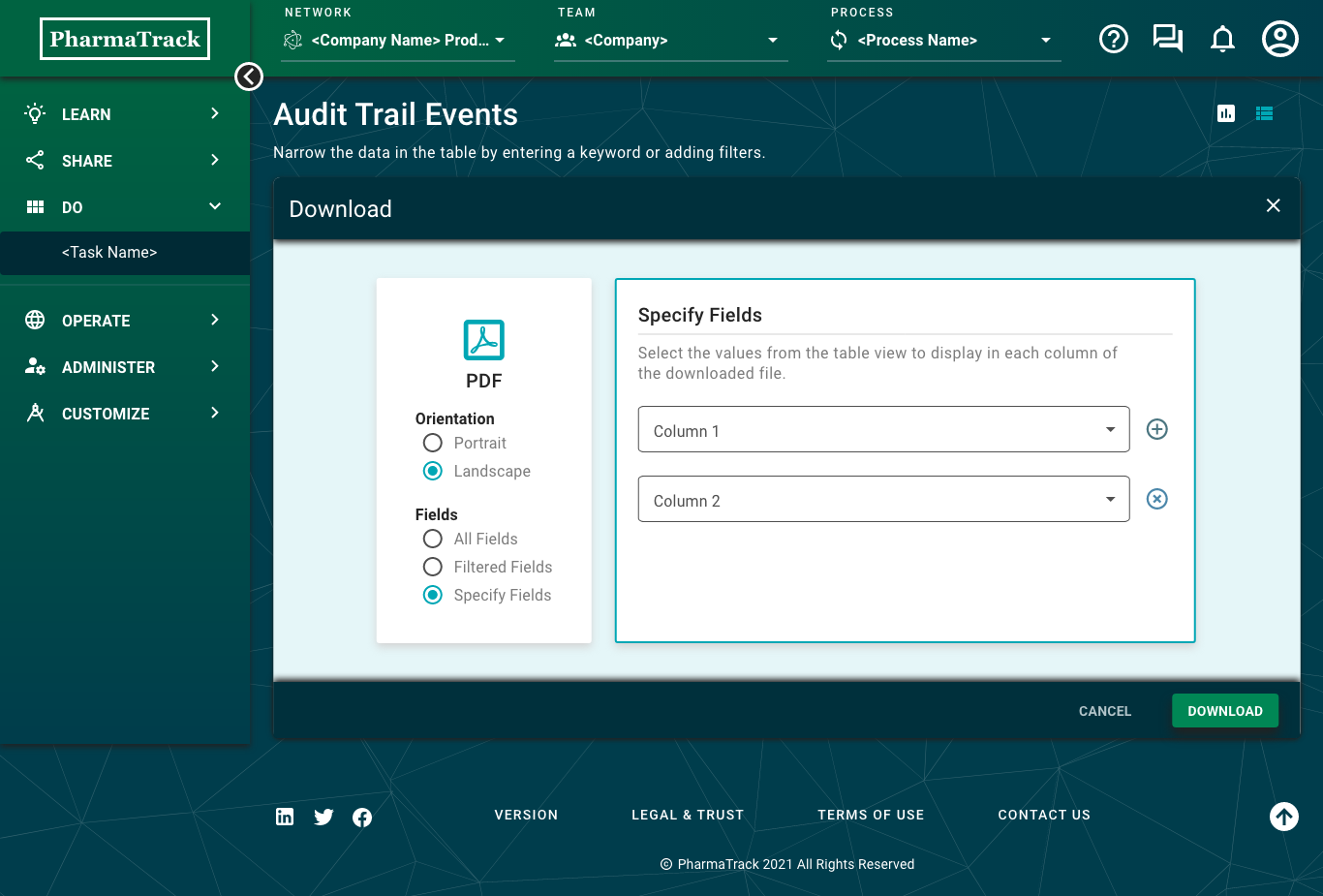
Audit Trail Events - Download PDF
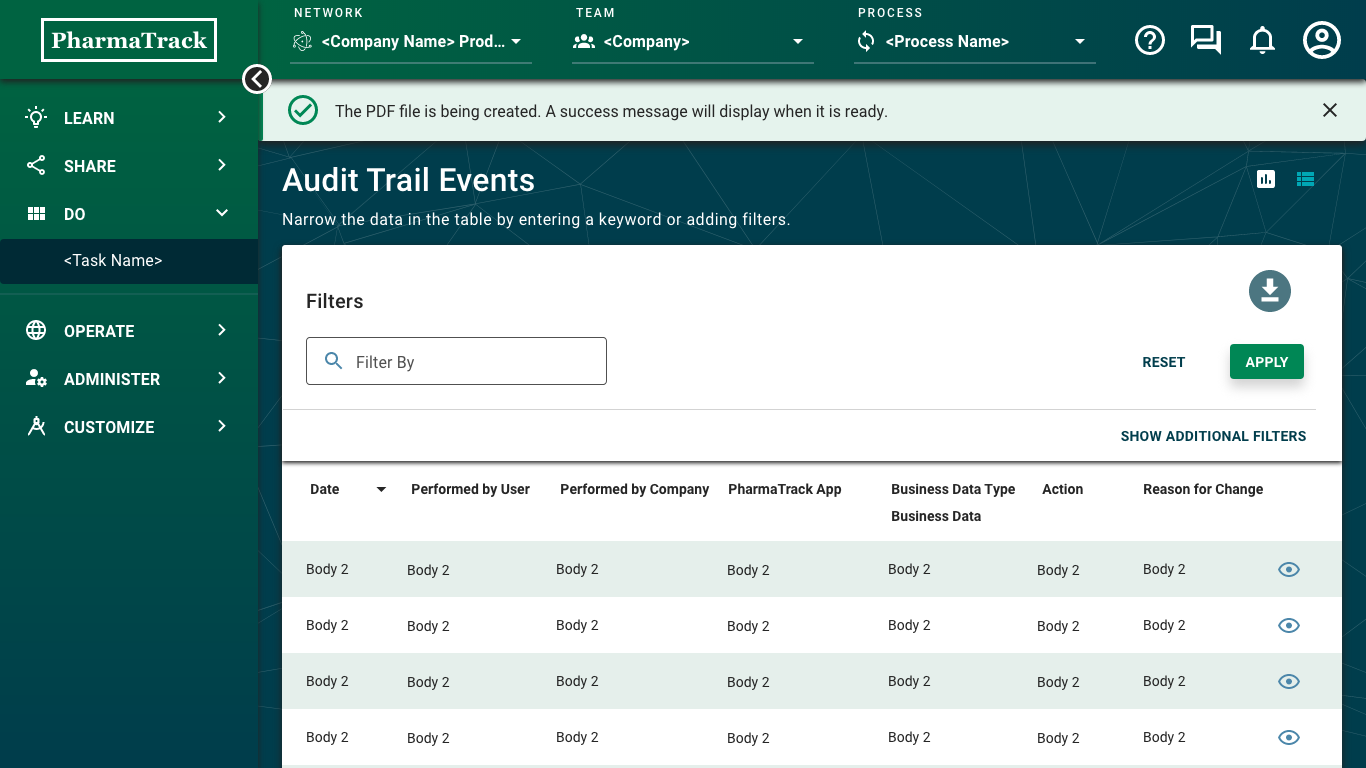
Audit Trail Events - PDF Creation Success
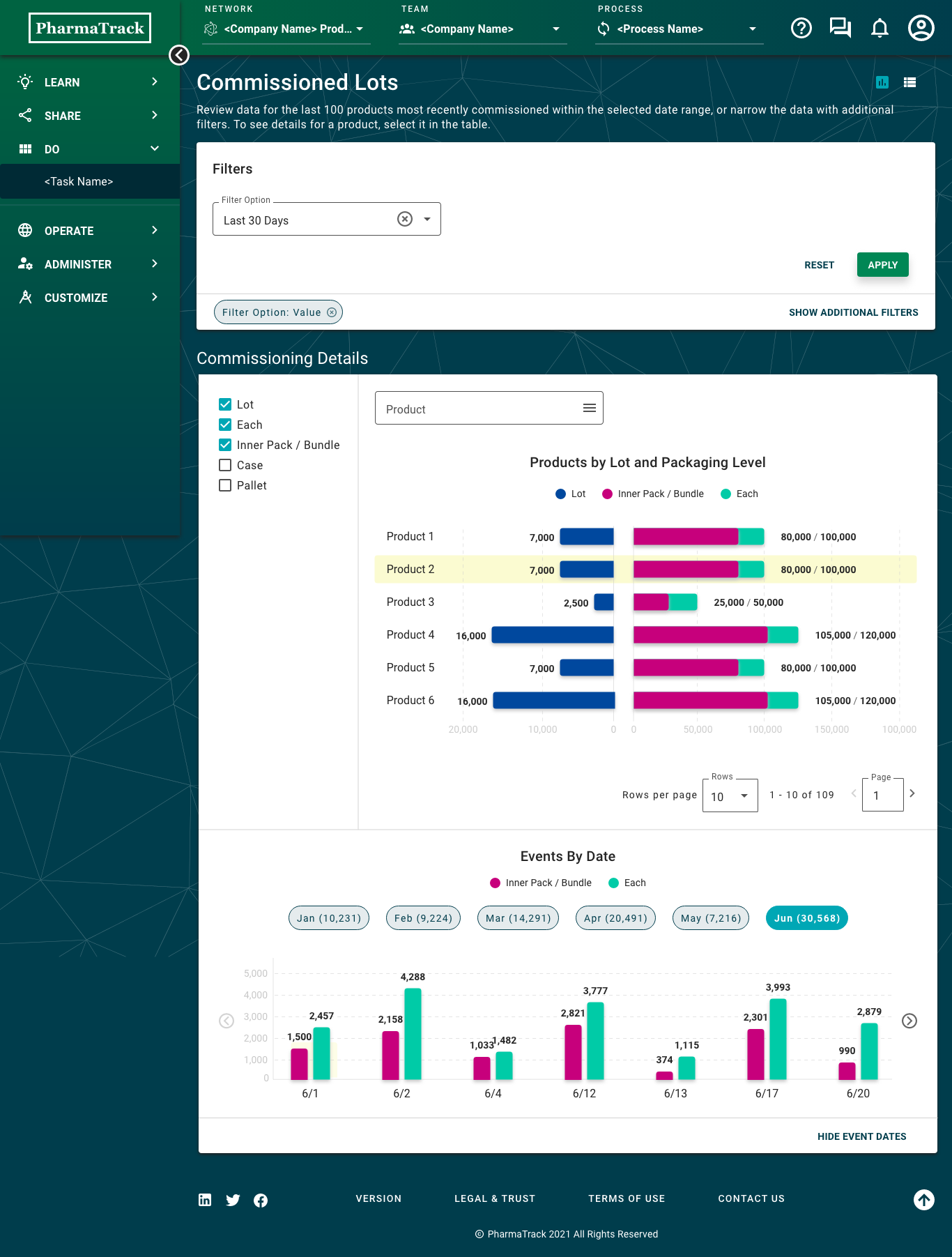
Commissioned Lots - Commissioning Details
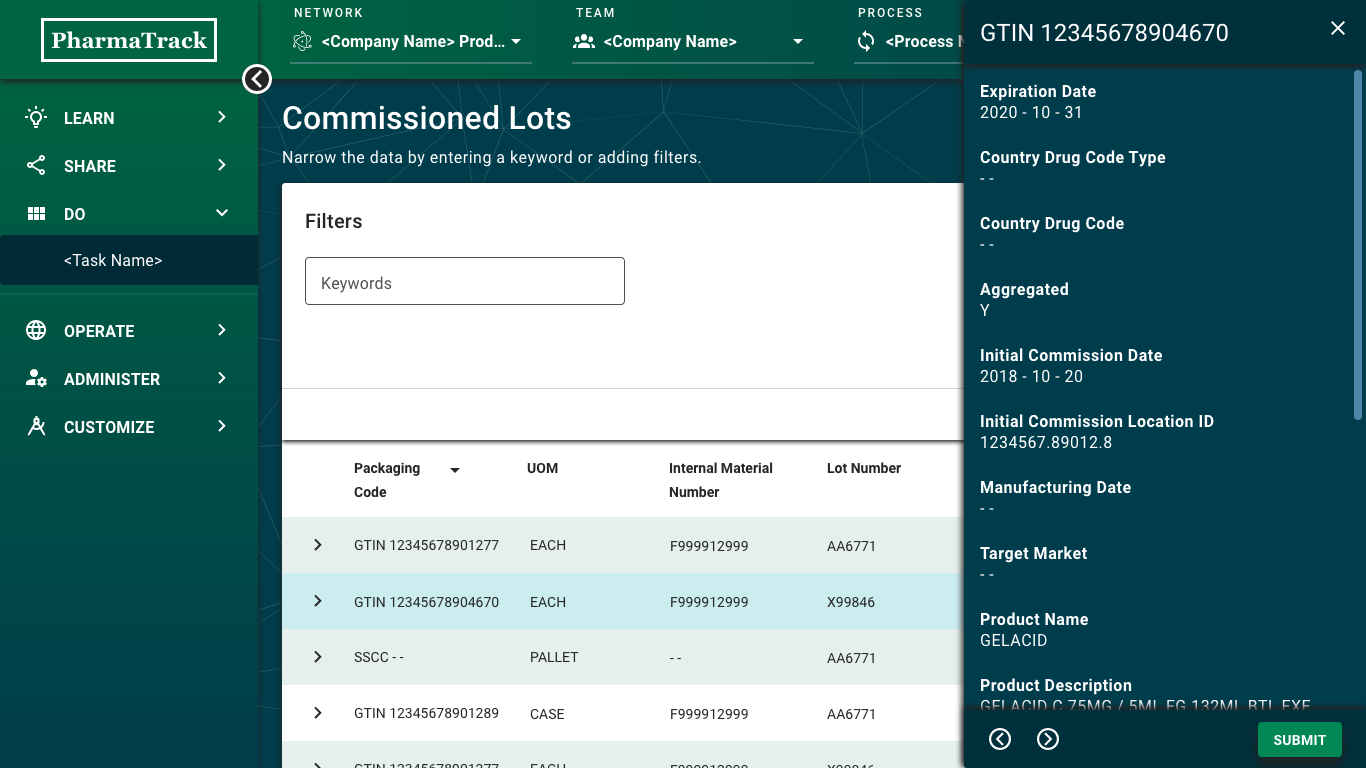
Commissioned Lots - GTIN Details
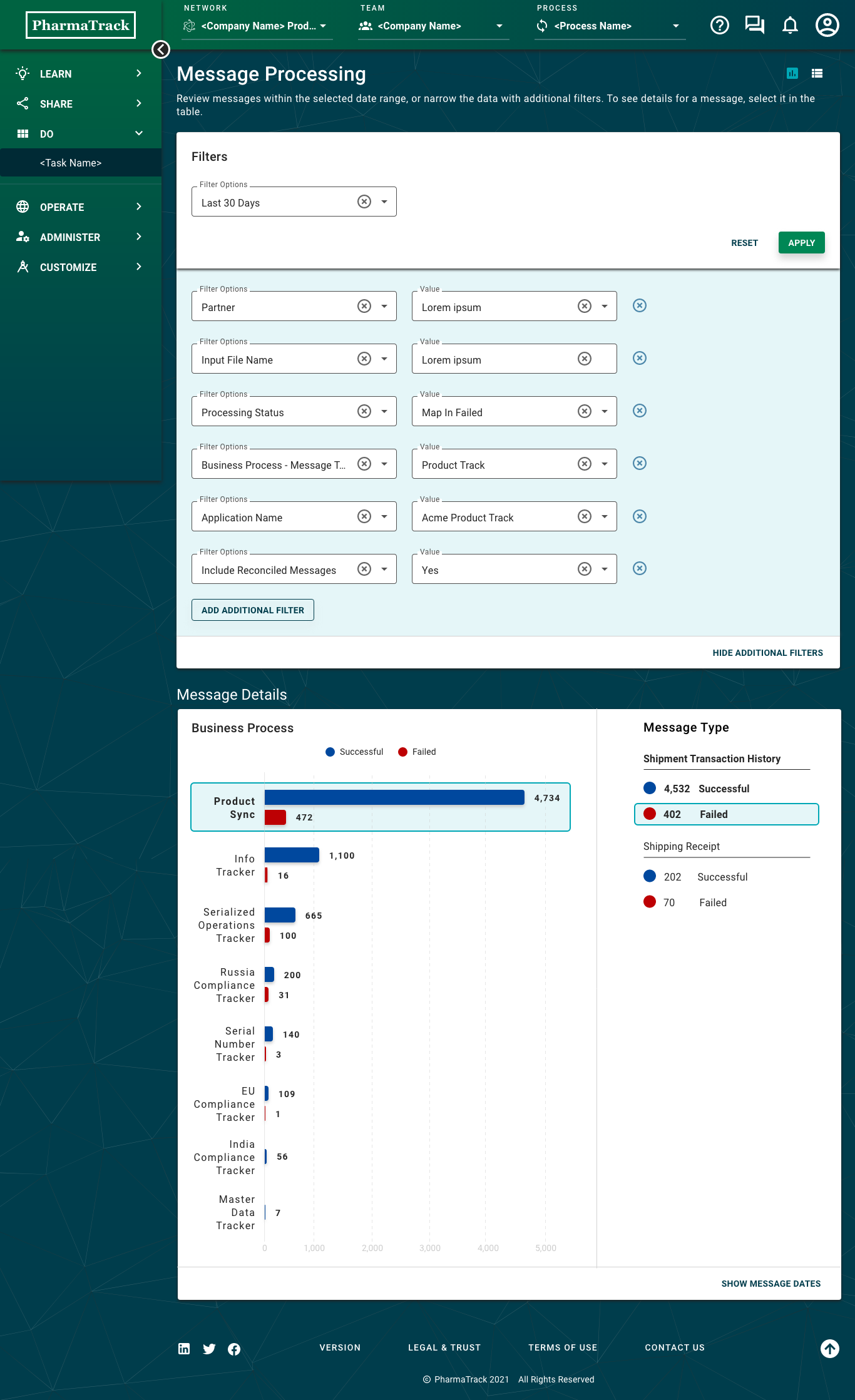
Message Processing - Message Details
Usability Testing
I led the product's first usability study, conducting moderated remote sessions to evaluate key workflows and validate design decisions. Using task-based scenarios, I gathered quantitative metrics, including task success rates, time on task, and SUS scores, alongside qualitative user feedback and behavioral insights.
I synthesized the findings into a research report with prioritized design recommendations, helping stakeholders identify opportunities to improve the overall user experience.
Reflections & Learnings
This project expanded my experience in the analytics space and strengthened my ability to transform complex serialization data into intuitive user experiences. Working closely with program management, design operations, and technical communications taught me how to balance user needs with business and technical requirements.
The highlight of the project was leading the product's first usability study. Observing users interact with my designs and successfully complete key tasks provided valuable validation, reinforced the importance of user-centered design, and uncovered opportunities for future improvements.